


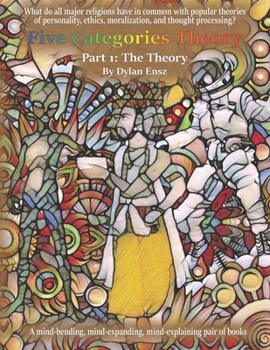
Five Categories Theory Part One: The Theory

Neuroscience cannot directly illuminate human thought processes; it merely illuminates the machinery creating thought processes. Neither can personal experience; we think, but we don't have full access to the inner workings of our minds. One can't directly study thought processes. One must triangulate from other disciplines.
I have finally decoded the human mind. By studying commonalities among psychological, religious, cultural, ethical, and political phenomena, I have isolated The Five Categories: The five lowest common denominators of human experience. Religions, societies, thinkers, and disciplines have consistently promoted reflections of The Five Categories. Consider The Big Five Personality Traits, by far the most scientifically accepted model of personality. Consider The Five Moral Foundations, Maslow's Hierarchy of Needs, The Five Pillars of Islam, and The Five Constants of Confucian Ethics. Each of these popular theories reduces a mind-based subject to its most fundamental components; each identifies five.
In this unifying theory of the humanities, I define The Five Categories and map the connections between the humanities. I then define the core ethical problems humans face. Ethics is a natural subject on which to elaborate this theory - minds express themselves via behavior, and ethics study behavior; also, The Five Categories finally provide something tangible around which to organize the core ethical problems.
A must-read for anyone interested in learning about psychology, philosophy and ethics, religion, narrative structure and mythology, political theory, or themselves. 5CategoriesTheory.comRelated Subjects
PsychologyCustomer Reviews
ThriftBooks ® and the ThriftBooks ® logo are registered trademarks of Thrift Books Global, LLC
