


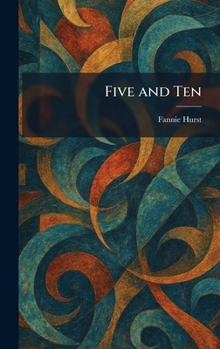
Five and Ten

"Five and Ten" is a compelling exploration of the American Dream and the corrosive power of sudden wealth. Written by the celebrated novelist Fannie Hurst, the story centers on John Rarick, an ambitious entrepreneur who builds a vast business empire of discount variety stores. As Rarick's fortune grows from pennies to millions, the narrative shifts from his professional triumphs to the profound personal costs paid by his family. His wife and children find themselves adrift in a world of luxury that offers little emotional fulfillment, leading to a poignant examination of the spiritual void at the heart of material success.
Hurst masterfully captures the frantic energy of the early 20th-century retail boom, contrasting the public spectacle of the "five and ten" cent stores with the private tragedies of those who own them. The novel serves as both a social critique of contemporary values and an intimate domestic drama. With its vivid characterizations and sharp insight into the human condition, "Five and Ten" remains a significant work of early modern American fiction, offering a timeless reflection on the pursuit of prosperity and the enduring search for meaning beyond the ledger book.
This work has been selected by scholars as being culturally important, and is part of the knowledge base of civilization as we know it. This work was reproduced from the original artifact, and remains as true to the original work as possible. Therefore, you may see the original copyright references, library stamps (as most of these works have been housed in our most important libraries around the world), and other notations in the work.
This work is in the public domain in the United States of America, and possibly other nations. Within the United States, you may freely copy and distribute this work, as no entity (individual or corporate) has a copyright on the body of the work.
As a reproduction of a historical artifact, this work may contain missing or blurred pages, poor pictures, errant marks, etc. Scholars believe, and we concur, that this work is important enough to be preserved, reproduced, and made generally available to the public. We appreciate your support of the preservation process, and thank you for being an important part of keeping this knowledge alive and relevant.
Customer Reviews
ThriftBooks ® and the ThriftBooks ® logo are registered trademarks of Thrift Books Global, LLC
