


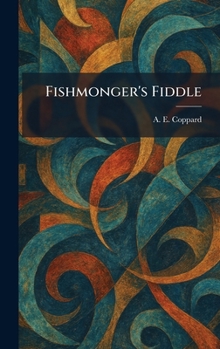
Fishmonger's Fiddle

"Fishmonger's Fiddle" is a celebrated collection of short stories by the acclaimed British author A.E. Coppard. Known for his distinctive voice and mastery of the short form, Coppard weaves a series of tales that explore the complexities of human nature, the ironies of daily life, and the quiet dramas of the English countryside. The stories range from the whimsical to the profound, often blurring the lines between realism and a subtle, folk-like fantasy.
In this volume, readers encounter a diverse array of characters-from humble villagers to disillusioned dreamers-each rendered with Coppard's characteristic lyrical prose and keen psychological insight. The title story, along with others in the collection, demonstrates the author's ability to find extraordinary meaning in ordinary circumstances. Themes of love, loss, social convention, and the unpredictable nature of fate permeate the work, making it a quintessential example of early 20th-century British literary craftsmanship.
A.E. Coppard's work is essential for those who appreciate the art of the short story. "Fishmonger's Fiddle" stands as a testament to his legacy, offering a vivid window into a bygone era through prose that remains as evocative and sharp today as when it was first penned.
This work has been selected by scholars as being culturally important, and is part of the knowledge base of civilization as we know it. This work was reproduced from the original artifact, and remains as true to the original work as possible. Therefore, you may see the original copyright references, library stamps (as most of these works have been housed in our most important libraries around the world), and other notations in the work.
This work is in the public domain in the United States of America, and possibly other nations. Within the United States, you may freely copy and distribute this work, as no entity (individual or corporate) has a copyright on the body of the work.
As a reproduction of a historical artifact, this work may contain missing or blurred pages, poor pictures, errant marks, etc. Scholars believe, and we concur, that this work is important enough to be preserved, reproduced, and made generally available to the public. We appreciate your support of the preservation process, and thank you for being an important part of keeping this knowledge alive and relevant.
Customer Reviews
ThriftBooks ® and the ThriftBooks ® logo are registered trademarks of Thrift Books Global, LLC
