


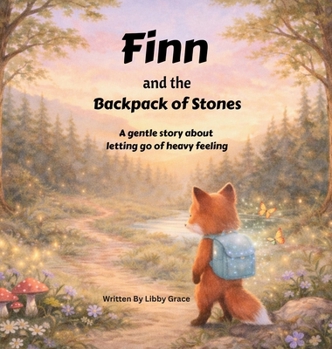
Finn and the Backpack of Stones

Finn and the Backpack of Stones is a compassionate and emotionally resonant children's picture book that gently explores what it feels like for a child to live between two homes and carry feelings they do not yet have the words to explain.
Finn is a young fox who moves between two very different worlds. In one home, he feels safe, calm, and deeply cared for. In the other, things feel heavier and harder to understand. The tones are different. The emotions are different. And without meaning to, Finn begins to carry both experiences with him wherever he goes.
He carries them in his backpack.
At first, the backpack feels light. But slowly, stones begin to appear inside. Each stone represents a feeling Finn cannot quite name. Worry. Confusion. Sadness. The quiet pressure to make everything okay. The feeling of being caught between two places, trying to hold both at once.
As the stones build, the backpack becomes heavier.
Finn begins to slow down. The forest that once felt peaceful and full of wonder becomes harder to move through. Playing, exploring, and simply being a child no longer feels as easy as it once did. Still, Finn believes the stones are his to carry.
Until one day, he meets a wise owl.
Through gentle guidance, Finn begins to understand something important. The stones in his backpack are not his responsibility. They are the emotions and struggles of the grown ups around him. With patience and care, Finn starts to set the stones down, one by one.
As the weight lifts, something beautiful returns.
Lightness. Curiosity. Joy. A sense of being able to breathe again.
Finn and the Backpack of Stones is written for children through about fourth grade and is especially meaningful for children navigating divorce, separation, blended families, or living between two households. It also serves as a supportive tool for parents, caregivers, therapists, and educators who want to open gentle, honest conversations about emotional safety and boundaries.
This story offers children reassurance that their feelings are real, that they are not alone, and most importantly, that they are not responsible for carrying the weight of adult problems.
It is a reminder for both children and adults that children deserve to feel safe, supported, and free to simply be children, no matter how many homes they have.
Customer Reviews
ThriftBooks ® and the ThriftBooks ® logo are registered trademarks of Thrift Books Global, LLC
