


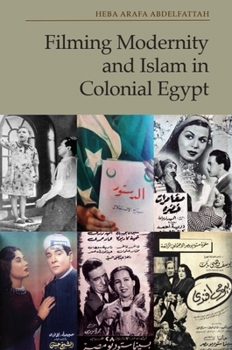
Filming Modernity and Islam in Colonial Egypt
No Customer Reviews

This book studies the rise of cinema in colonial Egypt as a supplemental secular public sphere that is not anti-religion. To this end, it investigates the reception of film by three centres of power: the colonial authorities, the Muslim clergy, and the Cairene bourgeoisie. It inquires about the representations of modernity in films produced during the time and the place filmmakers assigned to Islam in these representations. The result is a story of survival and coexistence told through the lens of cinema as modern art and popular culture negotiating its overt and covert censorship in the public sphere, despite colonization and war.
Format:Hardcover
Language:English
ISBN:139952075X
ISBN13:9781399520751
Release Date:October 2023
Publisher:Edinburgh University Press
Length:480 Pages
Weight:1.87 lbs.
Dimensions:1.1" x 6.1" x 9.2"
Customer Reviews
0 rating
Copyright © 2026 Thriftbooks.com
Terms of Use | Privacy Policy | Do Not Sell/Share My Personal Information | Cookie Policy | Cookie Preferences | Accessibility Statement
ThriftBooks ® and the ThriftBooks ® logo are registered trademarks of Thrift Books Global, LLC
ThriftBooks ® and the ThriftBooks ® logo are registered trademarks of Thrift Books Global, LLC
