


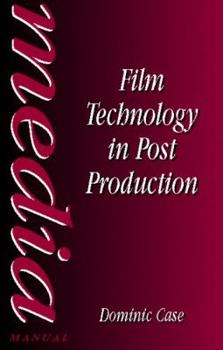
Film Technology in Post Production

Previous books on film laboratories have described the lab as the technical centre of the film production industry. In the modern world of Betacam shooting, telecine transfers, non-linear editing and cassette dubs, this is no longer true, and the lab is but one of several technical service providers. As the number of alternative pathways a film production can follow has increased, so the film maker needs a clearer understanding of the technical requirements of each function, in order to make well-informed decisions for each stage of the process. Film Technology in Post Production will fulfill that need. The book concentrates on the most frequently asked questions, and on those areas which cause the most trouble when misunderstood. Starting from a simple outline of the photographic process, it goes on to identify the alternative pathways for film production and post production, and describes the function of the lab in each step of each process. Particular emphasis is given to the often confusing requirements for production in Super 16 and the blow-up to 35mm, the intricacies of negative cutting to match a non-linear edit, and to the process of grading and regrading for the answer print. Dominic Case is a motion picture technical consultant, who is a world-respected expert on the subject of film technology services. He lectures extensively and was previously the author of Motion Picture Film Processing (also in the Media Manuals series) This title will replace both that book, and Your Film and the Lab
Format:Paperback
Language:English
ISBN:0240514637
ISBN13:9780240514635
Release Date:June 1997
Publisher:Focal Press
Length:160 Pages
Weight:0.50 lbs.
Dimensions:0.5" x 5.3" x 8.5"
Customer Reviews
1 rating
All you wanted to know, but were too afraid to ask!
Published by Thriftbooks.com User , 24 years ago
The film lab has always been the friend of the cinematographer, even if the methods and technology it represents remain a black-science to many. Author Dominic Case is Technology Manager at Atlab, Australasia's largest filmlab. He puts it best: "Traditional film technology and post production methods are far from simple ... but those used for the lowest budget short-film are essentially the same as those that have evolved for major feature films ... This book describes the arcane properties and procedures of post production for both traditional film-makers and those experienced in video or digital imaging ..."Film-stock, colour, B & W, sprockets and numbering, emulsion layers and processing, lab costs, density, gamma, grain, printing ... these and many more are each simply described on their own pages, together with a chart, diagram or accompanying image on the facing page. Editing (flat-bed and digital non-linear), Telecine and Video, Neg matching and cutting, Dupes, Blow-ups, Opticals, Sound and Grading are all given extensive coverage.This is such a good, detailed and yet easily understood primer on the laboratory and post process, that most film-makers won't need to go any further. Well worth putting on the bookshelf.
Copyright © 2026 Thriftbooks.com Terms of Use
| Privacy Policy | Do Not
Sell/Share My Personal Information | Cookie Policy | Cookie Preferences | Accessibility Statement
ThriftBooks® and the ThriftBooks® logo are registered trademarks of Thrift Books Global, LLC
ThriftBooks® and the ThriftBooks® logo are registered trademarks of Thrift Books Global, LLC
