


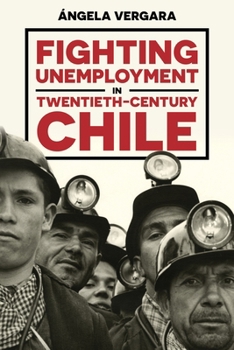
Fighting Unemployment in Twentieth-Century Chile
No Customer Reviews

In Fighting Unemployment in Twentieth-Century Chile, ngela Vergara narrates the story of how industrial and mine workers, peasants and day laborers, as well as blue-collar and white-collar employees earned a living through periods of economic, political, and social instability in twentieth-century Chile. The Great Depression transformed how Chileans viewed work and welfare rights and how they related to public institutions. Influenced by global and regional debates, the state put modern agencies in place to count and assist the poor and expand their social and economic rights. Weaving together bottom-up and transnational approaches, Vergara underscores the limits of these policies and demonstrates how the benefits and protections of wage labor became central to people's lives and culture, and how global economic recessions, political oppression, and abusive employers threatened their working-class culture. Fighting Unemployment in Twentieth-Century Chile contributes to understanding the profound inequality that permeates Chilean history through a detailed analysis of the relationship between welfare professionals and the unemployed, the interpretation of labor laws, and employers' everyday attitudes.
Format:Hardcover
Language:English
ISBN:0822946793
ISBN13:9780822946793
Release Date:April 2021
Publisher:University of Pittsburgh Press
Length:256 Pages
Weight:1.15 lbs.
Dimensions:1.0" x 6.1" x 9.1"
Customer Reviews
0 rating
Copyright © 2026 Thriftbooks.com
Terms of Use | Privacy Policy | Do Not Sell/Share My Personal Information | Cookie Policy | Cookie Preferences | Accessibility Statement
ThriftBooks ® and the ThriftBooks ® logo are registered trademarks of Thrift Books Global, LLC
ThriftBooks ® and the ThriftBooks ® logo are registered trademarks of Thrift Books Global, LLC
