


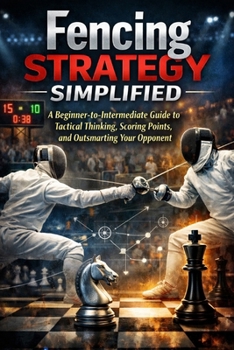
Fencing Strategy Simplified: A Beginner-to-Intermediate Guide to Tactical Thinking, Scoring Points, and Outsmarting Your Opponent

A Beginner-to-Intermediate Guide to Tactical Thinking, Scoring Points, and Outsmarting Your Opponent
Fencing is more than speed and technique-it's a game of timing, psychology, and decision-making. Fencing Strategy Simplified breaks down the tactical side of fencing into clear, practical concepts that help beginners and intermediate fencers think smarter, score more consistently, and control the bout.
Instead of overwhelming readers with complex theory, this guide explains how and why strategies work-from reading an opponent's habits to setting traps, managing distance, and choosing the right action at the right moment. Whether you fence foil, p e, or sabre, the principles in this book apply across weapons and competition levels.
Designed to bridge the gap between basic instruction and advanced competition, this book focuses on real bout situations, helping fencers move beyond reacting instinctively and toward fencing with intention. By understanding tactical patterns and mental discipline, readers learn how to turn mistakes into opportunities and pressure into points.
What's Inside This Book
Core fencing strategy explained in simple terms
Tactical thinking for beginners and intermediate fencers
How to read opponents and recognize patterns
Distance, timing, and tempo control
Offensive and defensive decision-making
Scoring strategies for foil, p e, and sabre
Common tactical mistakes and how to fix them
Mental preparation and bout awareness
Who This Book Is For
Beginner fencers learning competitive strategy
Intermediate fencers seeking consistency and confidence
Coaches looking for clear teaching explanations
Students transitioning from drills to live bouts
Recreational and competitive fencing athletes
Anyone who wants to fence smarter-not just faster
Great fencing is not about memorizing actions-it's about understanding intention. When you learn to anticipate instead of react, to pressure instead of chase, and to think one step ahead, fencing becomes a conversation rather than a contest of reflexes. Mastering strategy doesn't just improve your results-it changes how you experience the bout itself. With the right mindset and tactical awareness, every exchange becomes an opportunity to outthink, outmaneuver, and outscore your opponent.
Customer Reviews
ThriftBooks® and the ThriftBooks® logo are registered trademarks of Thrift Books Global, LLC
