


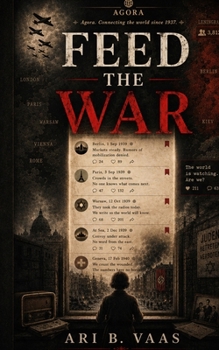
Feed the War

What if the world could watch World War II unfold in real time - and still choose not to act?
In 1939, Agora connects the world.
A global social platform promises to bring people closer together, giving ordinary citizens, soldiers, journalists, governments, and strangers a way to speak across borders. Recipes, jokes, photographs, prayers, rumors, propaganda, and breaking news all move through the same endless feed.
Then Germany invades Poland.
In Warsaw, seventeen-year-old Miriam begins posting about strange planes, curfews, walls, books, hunger, fear, and the small pieces of ordinary life that survive inside catastrophe.
In Cincinnati, Dorothy Crane finds Miriam's account and cannot look away, even as her husband insists it is "not our war."
In Berlin, Elias Brandt helps the Nazi propaganda machine learn how to turn attention into a weapon.
In San Francisco, Agora's own trust and safety team sees the truth spreading through the platform - and sees the lies spreading faster.
And across the world, millions of people scroll, react, argue, share, doubt, pray, and move on.
FEED THE WAR is a literary alternate-history novel about witness, propaganda, complicity, and the terrible distance between knowing and doing. Told through posts, reports, private messages, and intimate narrative, it asks a question that belongs as much to our time as to theirs:
If everyone can see what is happening, what does it mean when the world still looks away?
Perfect for readers of literary historical fiction, epistolary novels, World War II fiction, and stories about memory, media, and moral courage.
Customer Reviews
ThriftBooks ® and the ThriftBooks ® logo are registered trademarks of Thrift Books Global, LLC
