


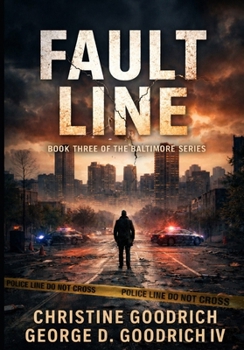
Fault Line

Baltimore didn't break.
It adapted.
After a citywide crisis exposes cracks in emergency systems and public trust, Baltimore emerges stronger-faster response times, tighter coordination, smarter deployment. Officials call it resilience.
Detective Sean Mallory calls it something else.
When a coordinated blackout triggers a chain of perfectly measured reactions, Mallory begins to see a pattern beneath the recovery. Infrastructure failures align too neatly. Response times improve too precisely. Data models surface that suggest the city wasn't just responding to chaos - it was being observed during it.
As Mallory digs deeper, he uncovers evidence that Baltimore may have been used as a control reference in a broader behavioral study - one designed to measure how cities, institutions, and individuals react under pressure.
But here's the problem:
The system works.
Crime drops. Panic decreases. The city stabilizes.
So what happens when stability itself becomes the experiment?
Caught between public confidence and private doubt, Mallory must confront a chilling possibility: he wasn't fighting collapse - he was helping validate the model behind it.
In Fault Line, the Baltimore Series shifts from street-level crime to psychological suspense, exploring the fragile space between safety and control - and asking the question no one wants to answer:
Who decides how a city survives?
Customer Reviews
ThriftBooks ® and the ThriftBooks ® logo are registered trademarks of Thrift Books Global, LLC
