


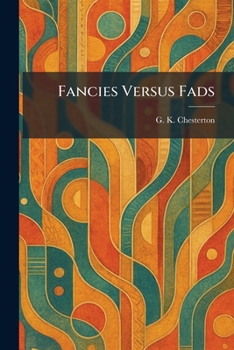
Fancies Versus Fads

"Fancies Versus Fads" is a spirited collection of essays by the renowned writer G.K. Chesterton. In this work, Chesterton explores the tension between enduring human values and the fleeting trends of modern society. Through a series of witty and thought-provoking pieces, he addresses a wide array of subjects ranging from dietary fads and legal peculiarities to the deeper philosophical shifts of his time.
With his signature use of paradox and sharp cultural insight, Chesterton defends the "fancies"-those imaginative and traditional truths that sustain civilization-against the "fads" that promise progress but often deliver confusion. Readers will find a masterclass in social commentary, as the author dissects contemporary vanities with both humor and earnestness. "Fancies Versus Fads" remains a significant contribution to literary non-fiction, offering a timeless defense of common sense and tradition in a rapidly changing world. Each essay serves as a reminder of the importance of clear thinking and the joy found in the permanent things of life.
This work has been selected by scholars as being culturally important, and is part of the knowledge base of civilization as we know it. This work was reproduced from the original artifact, and remains as true to the original work as possible. Therefore, you may see the original copyright references, library stamps (as most of these works have been housed in our most important libraries around the world), and other notations in the work.
This work is in the public domain in the United States of America, and possibly other nations. Within the United States, you may freely copy and distribute this work, as no entity (individual or corporate) has a copyright on the body of the work.
As a reproduction of a historical artifact, this work may contain missing or blurred pages, poor pictures, errant marks, etc. Scholars believe, and we concur, that this work is important enough to be preserved, reproduced, and made generally available to the public. We appreciate your support of the preservation process, and thank you for being an important part of keeping this knowledge alive and relevant.
Customer Reviews
ThriftBooks ® and the ThriftBooks ® logo are registered trademarks of Thrift Books Global, LLC
