


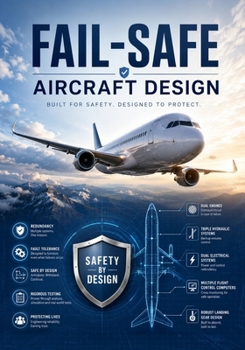
Fail-Safe Aircraft Design

Fail-Safe Aircraft Design: Principles, Practices, and Engineering Philosophy
Every time an aircraft lands safely, it is not because nothing went wrong it is because something was designed to hold when something else gave way. This book explores the century-long discipline of fail-safe engineering, from the redundant load paths in a wing spar to the dissimilar software running on a fly-by-wire computer. Through clear explanations of structures, materials, hydraulics, electrical systems, and flight controls, it shows how aviation has learned, often at terrible cost, to make catastrophic failure improbable rather than impossible. Detailed case studies the De Havilland Comet, Aloha Airlines, United 232, the 737 MAX reveal how real accidents reshaped regulation, training, and design philosophy. The book also looks ahead, examining the fail-safe challenges of autonomous aircraft, artificial intelligence, and the coming transition to hydrogen and electric propulsion. Written for engineering students, working professionals, pilots, and curious travelers alike, it offers both technical depth and human insight. At its heart is a single recurring question that has shaped every chapter of aviation history: when this fails, what holds? The answer, this book argues, is never an accident it is always a choice.
Customer Reviews
ThriftBooks ® and the ThriftBooks ® logo are registered trademarks of Thrift Books Global, LLC
