


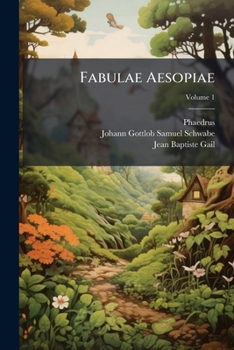
Fabulae Aesopiae; Volume 1

Fabulae Aesopiae, Volume 1, presents a collection of Aesop's fables, adapted and retold by Phaedrus and edited by Johann Gottlob Samuel Schwabe and Jean-Baptiste Gail. These timeless tales, known for their simple yet profound moral lessons, have captivated readers of all ages for centuries. This volume offers a gateway to the world of classical literature, providing accessible versions of fables featuring anthropomorphic animals and insightful reflections on human nature.
The enduring appeal of Aesop's fables lies in their ability to impart wisdom through engaging narratives. Readers will encounter familiar characters and scenarios that explore themes of justice, cunning, and the importance of virtue. This edition preserves the literary value of the original stories while ensuring they remain relevant and enjoyable for modern audiences. A valuable addition to any library, "Fabulae Aesopiae" is perfect for students, educators, and anyone who appreciates the art of storytelling.
This work has been selected by scholars as being culturally important, and is part of the knowledge base of civilization as we know it. This work was reproduced from the original artifact, and remains as true to the original work as possible. Therefore, you will see the original copyright references, library stamps (as most of these works have been housed in our most important libraries around the world), and other notations in the work.
This work is in the public domain in the United States of America, and possibly other nations. Within the United States, you may freely copy and distribute this work, as no entity (individual or corporate) has a copyright on the body of the work.
As a reproduction of a historical artifact, this work may contain missing or blurred pages, poor pictures, errant marks, etc. Scholars believe, and we concur, that this work is important enough to be preserved, reproduced, and made generally available to the public. We appreciate your support of the preservation process, and thank you for being an important part of keeping this knowledge alive and relevant.
Customer Reviews
ThriftBooks® and the ThriftBooks® logo are registered trademarks of Thrift Books Global, LLC
