


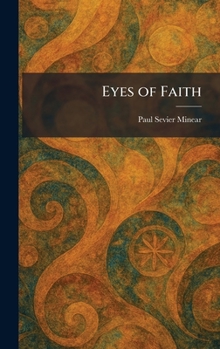
Eyes of Faith

"Eyes of Faith" is a profound exploration of biblical theology and the unique perspective through which the authors of the Bible perceived the world and God's intervention in human history. Paul Sevier Minear delves into the "biblical mindset," contrasting the prophetic and apostolic view of reality with modern philosophical and scientific interpretations. The work focuses on the internal logic of faith, examining how the eyes of faith allow a believer to discern divine purpose within the flow of time and events.
Throughout this study, Minear analyzes key biblical themes such as the nature of revelation, the significance of the covenant, and the role of the community in witnessing to the truth. By reconstructing the environment of the biblical witnesses, the author provides readers with a deeper understanding of the New Testament's message and its call to a specific way of seeing. "Eyes of Faith" serves as a critical resource for scholars and students who seek to bridge the gap between ancient scripture and contemporary theological reflection. It remains an essential text for understanding the hermeneutics of faith and the enduring power of the biblical narrative.
This work has been selected by scholars as being culturally important, and is part of the knowledge base of civilization as we know it. This work was reproduced from the original artifact, and remains as true to the original work as possible. Therefore, you may see the original copyright references, library stamps (as most of these works have been housed in our most important libraries around the world), and other notations in the work.
This work is in the public domain in the United States of America, and possibly other nations. Within the United States, you may freely copy and distribute this work, as no entity (individual or corporate) has a copyright on the body of the work.
As a reproduction of a historical artifact, this work may contain missing or blurred pages, poor pictures, errant marks, etc. Scholars believe, and we concur, that this work is important enough to be preserved, reproduced, and made generally available to the public. We appreciate your support of the preservation process, and thank you for being an important part of keeping this knowledge alive and relevant.
Customer Reviews
ThriftBooks ® and the ThriftBooks ® logo are registered trademarks of Thrift Books Global, LLC
