


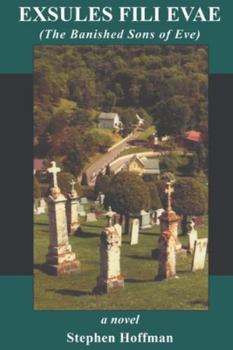
Exsules Filii Evae (The Banished Sons of Eve)

Eileen O'Rourke is a sometime nun who left home in ninth grade for the convent. Now she's about to turn 39, and the depressed mother she fled by entering r eligious life has finally died. Eileen has come back to her Wisconsin hometown to put her mother's house on the market, but also to ask herself some difficult questions about what actually sustained her vocation until now.
She finds a friend in Adrian Underwood, a 24-year-old local seminarian who's wondering what it means, exactly, to be gay and Catholic, and wrestling with the complex notion of what it is to be called to the priesthood. Other than perpetuating a struggle with authority, does he have any reason to be in the seminary?
For each, the other's friendship comes to play an unexpected role in the search for peace of mind and a measure of happiness.
Exsules Filii Evae (The Banished Sons of Eve) sounds the inner lives of a seminarian and a nun in the 1980s, capturing a time when there was still hope among left-leaning Catholics that the center might hold--before papal quashing of the women's ordination movement, the censure of liberal theologians, and tides of sexual scandal in the church that led to finger-pointing at gays had made that possibility seem ever-more-remote. It's a thoughtful person's novel about experiences in a religious tradition--the untold story of what happens when doubt begins to occur in the lives of people who have committed themselves over a lifetime to an institution that will inevitably fall short of their hopes.
Loss comes in many shades, some of them complicated and unacknowledged, and Adrian and Eileen's intertwined story is one of two individuals who pick themselves up and find renewed hope in not-the-most-likely places.
Customer Reviews
ThriftBooks® and the ThriftBooks® logo are registered trademarks of Thrift Books Global, LLC
