


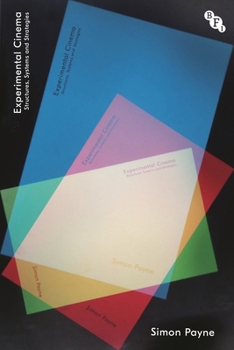
Experimental Cinema: Structures, Systems and Strategies
No Customer Reviews

Experimental Cinema examines a range of structures, systems and strategies that film and video artists have developed from the late 1960s to the present. Over the decades, artists have responded to the ever-changing medium of cinema and its technological advances, as well as taking inspiration from painting, sculpture and music.
Simon Payne argues that the evolution of methodical strategies in experimental cinema goes back to the first avant-garde films made a century ago, in the 1920s. He shows how key figures internationally have formed part of this picture since then, but suggests that the most thorough formal exploration of cinema can be credited to a generation of artists that began making films in Britain in the 1960s and 1970s. Payne analyses the work of numerous influential artists including Peter Gidal, David Hall, Malcolm Le Grice, Annabel Nicolson, Jayne Parker and Guy Sherwin. He discusses recent and lesser-known works as well as canonical films, videos and expanded cinema. He also pays close attention to younger artists including Jenny Baines, Neil Henderson, Jennifer Nightingale and Samantha Rebello. Experimental Cinema traces a lineage that has defined some of the central preoccupations of artists' film and video, which continue to test our expectations of cinema, television and the moving image.Format:Paperback
Language:English
ISBN:1839026480
ISBN13:9781839026485
Release Date:May 2026
Publisher:British Film Institute
Length:256 Pages
Weight:1.00 lbs.
Dimensions:1.0" x 6.1" x 9.2"
Customer Reviews
0 rating
Copyright © 2026 Thriftbooks.com Terms of Use
| Privacy Policy | Do Not
Sell/Share My Personal Information | Cookie Policy | Cookie Preferences | Accessibility Statement
ThriftBooks® and the ThriftBooks® logo are registered trademarks of Thrift Books Global, LLC
ThriftBooks® and the ThriftBooks® logo are registered trademarks of Thrift Books Global, LLC
