


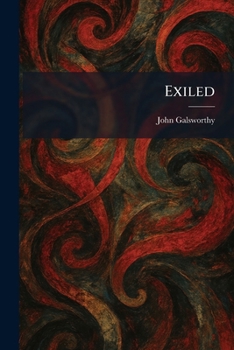
Exiled

"Exiled" is a compelling three-act play by Nobel Prize winner John Galsworthy that explores the profound social and economic shifts of post-World War I England. Set in a struggling mining community, the narrative examines the intersection of the declining landed gentry and the industrial working class. The play focuses on the displacement of individuals caught between a vanishing past and an uncertain future, highlighting the sense of alienation experienced by those who feel like strangers in their own land.
Galsworthy masterfully captures the tension between traditional British values and the harsh realities of modern industrialism. Through poignant dialogue and nuanced character studies, the work addresses themes of social justice, the human cost of economic progress, and the systemic failures that lead to poverty and exile. "Exiled" remains a significant piece of 20th-century drama, showcasing the author's hallmark ability to dramatize complex moral dilemmas and class dynamics. It serves as a vivid historical portrait of a nation in transition and a powerful testament to Galsworthy's enduring legacy as a social critic and playwright.
This work has been selected by scholars as being culturally important, and is part of the knowledge base of civilization as we know it. This work was reproduced from the original artifact, and remains as true to the original work as possible. Therefore, you may see the original copyright references, library stamps (as most of these works have been housed in our most important libraries around the world), and other notations in the work.
This work is in the public domain in the United States of America, and possibly other nations. Within the United States, you may freely copy and distribute this work, as no entity (individual or corporate) has a copyright on the body of the work.
As a reproduction of a historical artifact, this work may contain missing or blurred pages, poor pictures, errant marks, etc. Scholars believe, and we concur, that this work is important enough to be preserved, reproduced, and made generally available to the public. We appreciate your support of the preservation process, and thank you for being an important part of keeping this knowledge alive and relevant.
Related Subjects
DramaCustomer Reviews
ThriftBooks ® and the ThriftBooks ® logo are registered trademarks of Thrift Books Global, LLC
