


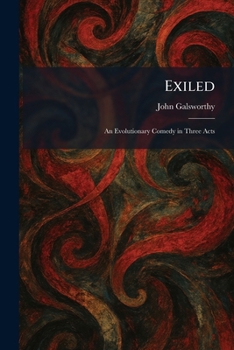
Exiled: An Evolutionary Comedy in Three Acts

"Exiled: An Evolutionary Comedy in Three Acts" is a compelling play by the Nobel Prize-winning author John Galsworthy. Set against the backdrop of post-World War I England, the drama explores the shifting social tides and the inevitable friction between tradition and progress. Galsworthy, known for his keen observation of the British class system, utilizes a comedic framework to examine the displacement of the landed gentry and the rise of new economic forces.
The narrative unfolds through three acts, presenting a microcosm of a society in transition. As the characters grapple with their changing status and the evolutionary demands of a modernizing world, Galsworthy provides a satirical yet empathetic look at the human condition. The play delves into themes of belonging, the loss of heritage, and the resilience required to adapt to a world that no longer values the status quo.
Rich in dialogue and social insight, "Exiled: An Evolutionary Comedy in Three Acts" stands as a significant work in Galsworthy's dramatic canon. It captures the essence of an era marked by deep-seated change, offering a window into the complexities of early 20th-century life. This play remains an essential piece for those interested in classic British drama and the literary exploration of societal evolution.
This work has been selected by scholars as being culturally important, and is part of the knowledge base of civilization as we know it. This work was reproduced from the original artifact, and remains as true to the original work as possible. Therefore, you may see the original copyright references, library stamps (as most of these works have been housed in our most important libraries around the world), and other notations in the work.
This work is in the public domain in the United States of America, and possibly other nations. Within the United States, you may freely copy and distribute this work, as no entity (individual or corporate) has a copyright on the body of the work.
As a reproduction of a historical artifact, this work may contain missing or blurred pages, poor pictures, errant marks, etc. Scholars believe, and we concur, that this work is important enough to be preserved, reproduced, and made generally available to the public. We appreciate your support of the preservation process, and thank you for being an important part of keeping this knowledge alive and relevant.
Customer Reviews
ThriftBooks ® and the ThriftBooks ® logo are registered trademarks of Thrift Books Global, LLC
