


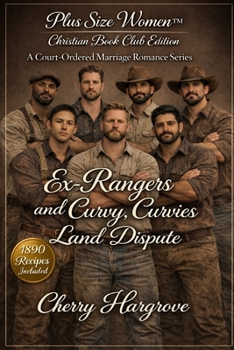
Ex-Rangers and Curvy, Curvies Land Dispute

In the late 1890s, land meant survival, legacy, and power-and mistakes were not easily undone.
When seven curvy, determined women arrive in a Kansas rail town to claim a single homestead they lawfully purchased, they expect to begin again quietly. Instead, they find seven former railroad protectors already living on the land-armed with their own deeds, forged by hardship, and prepared to defend what they believe is rightfully theirs.
The first meeting is explosive.
Words fail quickly. Pride rises. And when the men attempt to force the women off the property, the women do not retreat. They fight back-hard. Trained by experience, survival, and discipline, the women meet force with force. Fists fly. Bodies hit the ground. Mud, bruises, and shock follow. What was meant to be a simple land claim becomes a public spectacle and a legal crisis.
The town is stunned. The sheriff intervenes. And the court is left with an impossible decision.
Faced with jail or marriage, both sides are bound together by law-but not by trust, affection, or understanding. These are not gentle unions. They are forged in resistance, resentment, and unresolved anger.
The women are not fragile pioneers. They are strategic, business-minded, and deeply resolved in their faith. Having surrendered their former lives to God, they refuse to surrender their dignity, their bodies, or their futures to men who have not yet learned how to love beyond authority and desire.
The men are no strangers to violence or danger, but they are unprepared for women who refuse submission without covenant. Accustomed to command, they must face their own assumptions about purity, ownership, and what it truly means to lead.
As outside forces emerge-teachers claiming broken promises, public accusations that rise to the highest courts, and national scrutiny over whether marriage can be imposed by law-the conflict deepens. Allegations of coercion, purity, and justice threaten to unravel both reputation and resolve.
Throughout it all, Scripture is not quoted lightly. Faith is tested in silence, in restraint, and in obedience. Love is not granted through force, words, or proximity-but proven through action, humility, and repentance.
This is not a gentle frontier romance.
It is a story of contested land, contested bodies, and contested beliefs.
Of women who fight to stand.
Of men who must learn to kneel.
And of marriages that survive only when law gives way to covenant.
Customer Reviews
ThriftBooks® and the ThriftBooks® logo are registered trademarks of Thrift Books Global, LLC
