


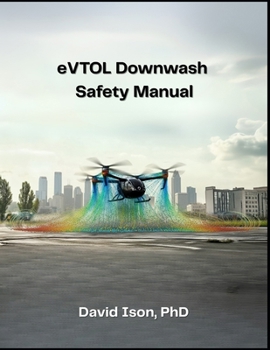
eVTOL Downwash Safety Manual

eVTOL Downwash Safety Manual: The Definitive Guide to Managing Electric Aircraft Operations
Navigate the unprecedented challenges of urban air mobility with science-based safety protocols
Revolutionary Safety Framework for the Future of Aviation
This comprehensive manual addresses the most critical safety challenge in urban air mobility: managing the extreme downwash effects of electric vertical takeoff and landing (eVTOL) aircraft. Based on extensive FAA research documenting hurricane-force winds exceeding 99 mph from routine aircraft operations, this guide provides essential knowledge for pilots, operators, and ground personnel entering this new era of aviation.
What Makes This Manual Essential:
Empirically Validated Safety Zones: Features the first scientifically-based three-zone safety framework, validated through comprehensive flight testing of leading eVTOL aircraft including Joby S4 and Archer Midnight configurationsUnprecedented Wind Velocities: Documents downwash intensities 2-4 times greater than traditional helicopters, requiring entirely new approaches to personnel safety and ground operationsAircraft-Specific Analysis: Detailed examination of different eVTOL configurations, from 6-rotor moderate complexity to 12-rotor high complexity systems, with specific operational procedures for eachRegulatory Compliance: Complete coverage of FAA SFAR 120, Engineering Brief 105A, and EASA SC-VTOL requirements, ensuring full regulatory complianceCritical Safety Insights:
The manual reveals that eVTOL downwash creates conditions equivalent to Category 2 hurricanes within 25 feet of aircraft operations. Unlike predictable helicopter patterns, multi-rotor aircraft generate complex, multi-modal velocity distributions with dangerous amplification zones and unpredictable temporal variations. Safety zones must extend 40-90% beyond helicopter requirements, with primary hazard zones reaching 85-foot radius for complex configurations.
Comprehensive Coverage Includes:
Technical fundamentals of distributed propulsion aerodynamicsEnhanced momentum theory applications for multi-rotor systemsEnvironmental factors affecting downwash intensity and patternsWeather limitations and density altitude effectsUrban operational challenges and building wake interactionsGround support equipment management in extreme wind conditionsEmergency procedures and human factors considerationsInternational regulatory frameworks and compliance strategiesTarget Audience:
Commercial eVTOL pilots transitioning from helicopter operationsCertified flight instructors developing eVTOL training programsOperators and safety managers planning commercial operationsGround operations personnel and vertiport designersRegulatory authorities and aviation safety professionalsAuthor Expertise: Dr. David Ison brings decades of aviation safety research and operational experience to address challenges that have no precedent in aviation history. This manual synthesizes cutting-edge research with practical operational procedures, bridging the gap between theoretical understanding and real-world safety implementation.
Why This Manual Matters Now: With commercial eVTOL operations beginning under SFAR 120, understanding these unprecedented safety challenges is no longer optional-it's essential for the survival and success of urban air mobility. Traditional helicopter experience provides inadequate preparation for managing multi-rotor downwash effects that can exceed 100 mph in operational areas.
The future of urban transportation depends on mastering these safety challenges. This manual provides the roadmap.
Related Subjects
TransportationCustomer Reviews
ThriftBooks ® and the ThriftBooks ® logo are registered trademarks of Thrift Books Global, LLC
