


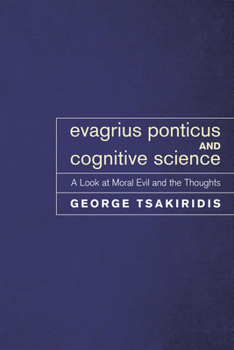
Evagrius Ponticus and Cognitive Science: A Look at Moral Evil and the Thoughts
No Customer Reviews

This study puts the thought of Evagrius Ponticus, a fourth-century theologian, into dialogue with modern cognitive science in regard to the topic of evil, specifically moral evil. Evagrius, in his writings about prayer and the ascetic life, addressed the struggle with personal moral evil in terms of the eight "thoughts" or "demons." These "thoughts" were transmitted by John Cassian to the Western church, and later recast by Gregory the Great as the Seven Deadly Sins. Though present understandings of evil appear to differ greatly from those of Evagrius, his wisdom concerning the battle against evil may prove to be of great help even today. Using the work of Pierre Hadot to recover Evagrius's context, and the work of Paul Ricoeur to discuss how we construct descriptions and myths of evil, Evagrius is brought into dialogue with the cognitive sciences. Using current research, especially the work of Eugene d'Aquili and Andrew Newberg, this study reveals the contemporary relevance of Evagrius' approach to combating evil. In addition, the interdisciplinary study of patristics and cognitive science opens the pathway to a better understanding between Christian tradition and the modern sciences.
Format:Hardcover
Language:English
ISBN:1498254748
ISBN13:9781498254748
Release Date:January 2010
Publisher:Pickwick Publications
Length:136 Pages
Weight:0.78 lbs.
Dimensions:0.4" x 6.0" x 9.0"
Customer Reviews
0 rating
Copyright © 2026 Thriftbooks.com Terms of Use
| Privacy Policy | Do Not
Sell/Share My Personal Information | Cookie Policy | Cookie Preferences | Accessibility Statement
ThriftBooks® and the ThriftBooks® logo are registered trademarks of Thrift Books Global, LLC
ThriftBooks® and the ThriftBooks® logo are registered trademarks of Thrift Books Global, LLC
