


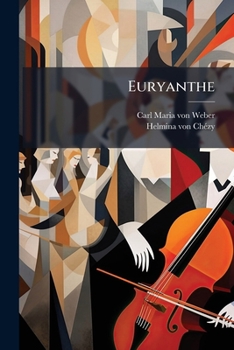
Euryanthe: Große, Historisch-romantische Oper In Drei Aufzügen

Euryanthe is a grand, historically romantic opera in three acts by Carl Maria von Weber, with a libretto by Helmina von Ch zy. Premiering in 1823, it is a pivotal work in the development of German Romantic opera. This edition presents the full score, allowing musicians and scholars to fully appreciate Weber's innovative orchestration and dramatic vocal writing.
The opera, set in medieval France, tells a complex tale of love, betrayal, and redemption. Its intricate plot and emotionally charged music showcase Weber's mastery of the operatic form. Though less frequently performed than some of Weber's other operas such as "Der Freisch tz", "Euryanthe" is admired for its sophisticated musical language and dramatic intensity.
This edition offers a valuable resource for those studying the history of opera and German Romanticism, as well as for performers interested in reviving this significant work. Weber's influence on later composers, including Wagner, is clearly evident in "Euryanthe", making it an essential part of the operatic canon.
This work has been selected by scholars as being culturally important, and is part of the knowledge base of civilization as we know it. This work was reproduced from the original artifact, and remains as true to the original work as possible. Therefore, you will see the original copyright references, library stamps (as most of these works have been housed in our most important libraries around the world), and other notations in the work.
This work is in the public domain in the United States of America, and possibly other nations. Within the United States, you may freely copy and distribute this work, as no entity (individual or corporate) has a copyright on the body of the work.
As a reproduction of a historical artifact, this work may contain missing or blurred pages, poor pictures, errant marks, etc. Scholars believe, and we concur, that this work is important enough to be preserved, reproduced, and made generally available to the public. We appreciate your support of the preservation process, and thank you for being an important part of keeping this knowledge alive and relevant.
Customer Reviews
ThriftBooks® and the ThriftBooks® logo are registered trademarks of Thrift Books Global, LLC
