


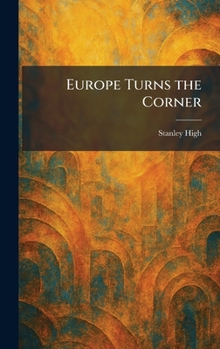
Europe Turns the Corner

"Europe Turns the Corner" is a compelling analytical study of the political and social landscape of Europe during the critical recovery period following World War I. This work provides an insightful contemporary perspective on the continent's efforts to move past the devastation of the Great War and establish a stable, lasting peace.
Stanley High explores the intricate dynamics of European diplomacy, the emerging influence of the League of Nations, and the internal struggles of nations as they navigate the shift from wartime mobilization to reconstruction. Through detailed observation and journalistic rigor, the book examines the economic challenges, the rise of new political movements, and the evolving spirit of the European people during this transformative decade. By assessing the progress made toward international cooperation and economic stabilization, High offers a hopeful yet realistic look at a region at a crossroads.
This work serves as a valuable historical document for readers interested in international relations, early 20th-century history, and the geopolitical foundations of modern Europe. "Europe Turns the Corner" captures the atmosphere of an era defined by both the scars of the past and the aspirations for a unified, peaceful future.
This work has been selected by scholars as being culturally important, and is part of the knowledge base of civilization as we know it. This work was reproduced from the original artifact, and remains as true to the original work as possible. Therefore, you may see the original copyright references, library stamps (as most of these works have been housed in our most important libraries around the world), and other notations in the work.
This work is in the public domain in the United States of America, and possibly other nations. Within the United States, you may freely copy and distribute this work, as no entity (individual or corporate) has a copyright on the body of the work.
As a reproduction of a historical artifact, this work may contain missing or blurred pages, poor pictures, errant marks, etc. Scholars believe, and we concur, that this work is important enough to be preserved, reproduced, and made generally available to the public. We appreciate your support of the preservation process, and thank you for being an important part of keeping this knowledge alive and relevant.
Customer Reviews
ThriftBooks ® and the ThriftBooks ® logo are registered trademarks of Thrift Books Global, LLC
