


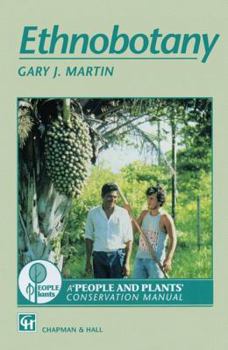
Ethnobotany: A Methods Manual

Select Format
Select Condition 
Book Overview
Ethnoecology has blossomed in recent years into an important science because of the realization that the vast body of knowledge contained in both indigenous and folk cultures is being rapidly lost as natural ecosystems and cultures are being destroyed by the encroachment of development. Ethnobotany and ethnozoology both began largely with direct observations about the ways in which people used plants and animals and consisted mainly of the compilation of lists. Recently, these subjects have adopted a much more scientific and quantitative methodology and have studied the ways in which people manage their environment and, as a consequence, have used a much more ecological approach. This manual of ethnobotanical methodology will become an essential tool for all ethnobiologists and ethnoecologists. It fills a significant gap in the literature and I only wish it had been available some years previously so that I could have given it to many of my students. I shall certainly recommend it to any future students who are interested in ethnoecology. I particularly like the sympathetic approach to local peoples which pervades this book. It is one which encourages the ethnobotanical work by both the local people themselves and by academically trained researchers. A study of this book will avoid many of the arrogant approaches of the past and encourage a fair deal for any group which is being studied. This manual promotes both the involvement oflocal people and the return to them of knowledge which has been studied by outsiders.
Format:Mass Market Paperback
Language:English
ISBN:041248370X
ISBN13:9780412483707
Release Date:December 1995
Publisher:Springer
Length:296 Pages
Weight:0.90 lbs.
Dimensions:0.6" x 6.1" x 9.2"
Customer Reviews
2 ratings
Excellent!!
Published by Thriftbooks.com User , 19 years ago
Excellent book, great bridge in the gap in the relevant literature. If you are a budding botanist, it is a must read, very comprehensive and a must-have in order to gather information and follow the scientific method
An excellent text for an ethnobotany field methods course.
Published by Thriftbooks.com User , 26 years ago
This book is one of the very few that is perfect for teaching a college level ethnobotany field methods class. It covers the how-tos of data collection, hypothesis testing, plant identification and collection for both general purposes and for phytochemical analysis. The book also includes sections on anthropological, ecological, economic, linguistic, conservation, and community development skills and knowledge necessary to going into the field to do ethnobotanical research.Class curriculum can be easily organized around the information provided in Martin's book. The only drawback to this book is the fact that it sold out very quickly in its first edition and the first reprint, both in 1995, so at the moment its back ordered waiting on the next reprinting.
Copyright © 2026 Thriftbooks.com Terms of Use
| Privacy Policy | Do Not
Sell/Share My Personal Information | Cookie Policy | Cookie Preferences | Accessibility Statement
ThriftBooks® and the ThriftBooks® logo are registered trademarks of Thrift Books Global, LLC
ThriftBooks® and the ThriftBooks® logo are registered trademarks of Thrift Books Global, LLC
