


All Formats & Editions
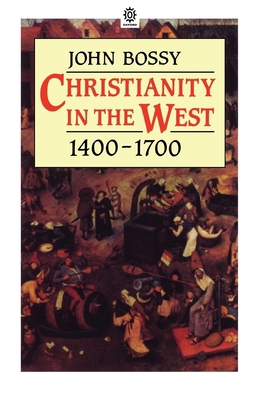
Christianity in the West 1400-1700
A study not of the institution of the Church but of Christianity itself, this book explores the Christian people, their beliefs, and their way of life, providing a new understanding of Western Christianity at the time of the Reformation. Bossy begins with a systematic exposition...
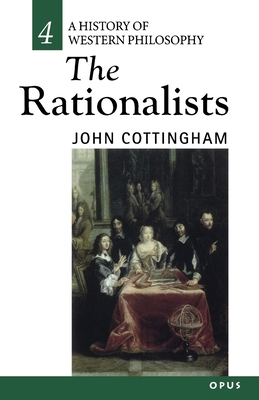
The Rationalists: History of Western Philosophy 4
The seventeenth century saw a major revolution in our ways of thinking about such issues as the method appropriate to philosophy and science, the relation between mind and body, the nature of substance, and the place of humanity in nature. While not neglecting the lesser but...
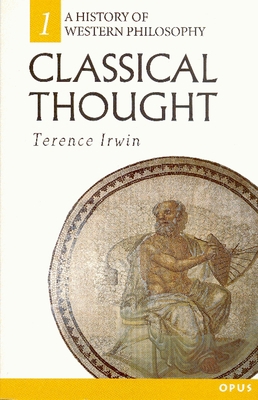
Classical Thought (History of Western Philosophy)
Covering over 1000 years of classical philosophy from Homer to Saint Augustine, this accessible, comprehensive study details the major philosophies and philosophers of the period--the Pre-Socratics, Socrates, Plato, Aristotle, Stoicism, Epicureanism, and Neoplatonism. Though...
The Problems of Biology
Concentrating on problems that commonly perplex general readers and beginning students, John Maynard Smith discusses fundamental issues in biology, with emphasis on evolution, development, and cognition. He provides a nontechnical account of molecular genetics, which is the foundation...

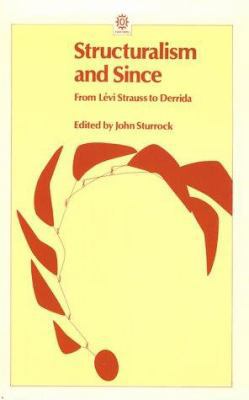
Structuralism and Since: From Lévi-Strauss to D...
This book considers the work of five French thinkers closely associated with structuralism, and offers a reasoned and positive presentation of an important body of contemporary thought.


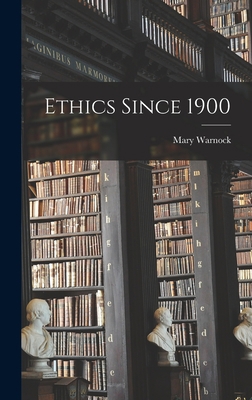
Ethics Since 1900
This book is a well informed and discriminating account of the main ethical problems that have been discussed this century in England, France, and the U.S. Besides dealing with key concepts in the work of Ayer, Hare, Moore, Nowell-Smith, Prichard, Ross, Sartre, Stevenson, Urmson,...

Ethics since 1900 (Home university library of m...

The Political Development of the British Isles ...
All too often British history means English history, and the histories of Wales, Scotland, and Ireland are left to scholars of the "Celtic Fringe". In this clear and authoritative introduction to the medieval history of the British Isles, the four countries are viewed together,...
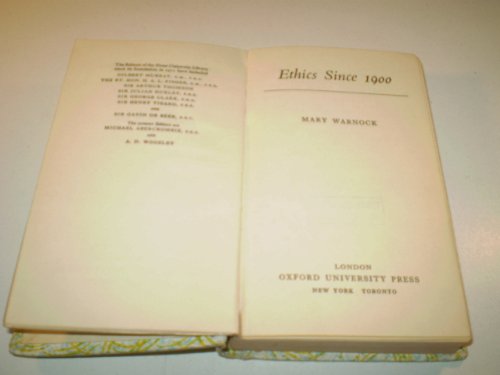
Ethics since 1900 (The Home university library ...


Ethics since 1900 (The Home university library ...

ThriftBooks ® and the ThriftBooks ® logo are registered trademarks of Thrift Books Global, LLC
