


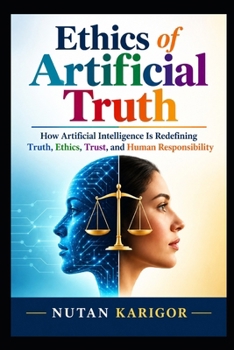
Ethics of Artificial Truth: How Artificial Intelligence Is Redefining Truth, Ethics, Trust, and Human Responsibility

WHEN YOU CAN NO LONGER TRUST WHAT YOU SEE, HEAR, OR READ-HOW WILL YOU KNOW WHAT IS TRUE?
Imagine hearing the unmistakable voice of someone you love-only to discover it was generated by AI. Imagine reading an article that sounds authoritative, seeing an image that looks real, or receiving a recommendation that quietly shapes your decision-without knowing whether a human being ever created it.
This is no longer a distant possibility. It is the new reality of the AI age.
Artificial intelligence can write, speak, generate images, imitate people, predict behavior, and produce persuasive content. But as machines become better at creating convincing versions of reality, one question becomes increasingly urgent:Who decides what is true-and who is responsible when artificial truth causes real-world consequences?
Ethics of Artificial Truth takes readers into the heart of this emerging challenge. It examines what happens when technology can manufacture not only information, but also the appearance of authenticity.
The book's central idea is both timely and essential: AI can generate information, but it cannot independently determine what humanity ought to accept as true, right, trustworthy, or morally responsible.
The book explores AI-generated misinformation, deepfakes, algorithmic bias, digital manipulation, privacy, surveillance, automated decision-making, authenticity, trust, accountability, and the moral consequences of delegating human judgment to machines.
It asks the questions that increasingly affect every reader:
Can something produced by AI be trusted simply because it looks convincing?
Who is accountable when an AI system creates harmful or deceptive content?
Can an algorithm truly be ethical, or does it reflect the values of its creators?
How can individuals protect themselves from increasingly sophisticated manipulation?
What happens to society when evidence itself can be manufactured?
Where should human responsibility begin-and where should technological power end?
Rather than portraying AI as either a miracle or a threat, this book offers a balanced, thought-provoking perspective centered on human responsibility. It challenges readers to look beyond technological progress and consider the values that should guide it.
Readers will gain a deeper understanding of how AI is reshaping truth and trust, while developing a stronger framework for critical thinking, verification, ethical judgment, digital awareness, and responsible engagement with artificial intelligence.
Ethics of Artificial Truth is ultimately a book about preserving something technology cannot manufacture on its own: human judgment, moral responsibility, and trust in reality.
As artificial intelligence becomes increasingly powerful, the ability to recognize truth may become one of humanity's most important skills.
The future will not be defined only by how intelligent our machines become-but by how wisely we choose to use them.
Are you ready to question what you believe, examine what you trust, and think more deeply about the future of AI?Open this book and begin the conversation that cannot be left to machines. Discover Ethics of Artificial Truth today-and take your place in the most important ethical discussion of the AI age.
Nutan Karigor writes on the social, ethical, and human consequences of technological change. Through accessible and thought-provoking books, the author explores artificial intelligence, truth, human judgment, ethics, and the future of society. Karigor's work encourages readers to think critically about emerging technologies while preserving human dignity, responsibility, wisdom, and the pursuit of truth.Customer Reviews
ThriftBooks ® and the ThriftBooks ® logo are registered trademarks of Thrift Books Global, LLC
