


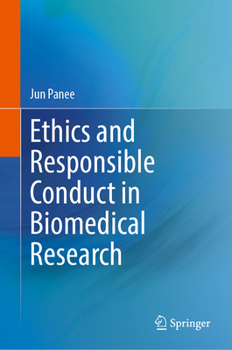
Ethics and Responsible Conduct in Biomedical Research

Responsible conduct of research (RCR) education is an essential--and often required--component of research training in the United States, including programs supported by the National Institutes of Health, National Science Foundation, and USDA National Institute of Food and Agriculture.
This bookprovides a comprehensive, contemporary guide to the knowledge and judgment required for trustworthy science. It addresses the major topics identified in federal RCR guidance, including ethical decision-making; research data management; scientific rigor and reproducibility; conflicts of interest; research misconduct; human- and animal-subject research; responsible authorship, peer review, and publication; scientific journals and research impact; intellectual property; collaboration; mentorship; professionalism; research environments; and scientists' responsibilities to society.
Going beyond regulatory compliance, the book integrates ethical principles with practical frameworks and engaging case studies. It is ideally suited for undergraduate and graduate students, postdoctoral scholars, junior investigators, instructors, and others seeking an accessible and practical introduction to ethics and integrity in biomedical research
Customer Reviews
ThriftBooks ® and the ThriftBooks ® logo are registered trademarks of Thrift Books Global, LLC
