


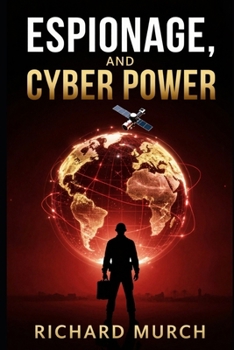
Espionage, And Cyber Power,: and the Global Struggle for Advantage in the Digital Age
No Customer Reviews

The center of gravity in espionage has shifted from the human to the digital, from the trench coat to the terabyte. For most of the twentieth century, the image of the spy was a human one. It was a figure in a raincoat passing an envelope on a rain-slicked Berlin bridge, a defector slipping across a checkpoint, a diplomat with a second, secret job. Intelligence was a physical craft. It depended on people willing to steal secrets and on the officers who cultivated them. The tools of the trade were dead drops, microdots, one-time pads, and the patient art of the recruitment pitch. Secrets lived in filing cabinets and safes, and to obtain them a service had to put a human being within reach of the vault. That world has not vanished, but it has been overtaken. Secrets no longer live only in safes. They live in databases, in cloud servers, in the routers that carry the world's telephone calls, and in the phones that almost every person on earth now carries. A single hard drive can hold what once filled a warehouse full of paper. A well-placed piece of malware can copy in an afternoon what a generation of case officers could not have obtained in a decade.
Format:Paperback
Language:English
ISBN:B0H8PRHVPH
ISBN13:9798187113972
Release Date:July 2026
Publisher:Independently Published
Length:60 Pages
Weight:0.19 lbs.
Dimensions:0.2" x 6.0" x 9.0"
Customer Reviews
0 rating
Copyright © 2026 Thriftbooks.com
Terms of Use | Privacy Policy | Do Not Sell/Share My Personal Information | Cookie Policy | Cookie Preferences | Accessibility Statement
ThriftBooks ® and the ThriftBooks ® logo are registered trademarks of Thrift Books Global, LLC
ThriftBooks ® and the ThriftBooks ® logo are registered trademarks of Thrift Books Global, LLC
