


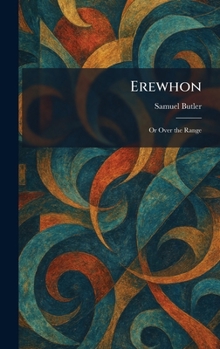
Erewhon: Or Over the Range

"Erewhon: Or Over the Range" is a pioneering work of satirical fiction that blends adventure with sharp social commentary. The narrative follows a young traveler who discovers a hidden civilization in the remote mountains of a distant land. This mysterious territory, known as Erewhon, appears at first glance to be a utopia, but the protagonist soon discovers a society governed by paradoxical and unsettling laws.
In Erewhon, physical illness is treated as a crime punishable by imprisonment, while moral failings and criminal acts are regarded as unfortunate maladies requiring medical sympathy. One of the most prophetic elements of the work is the "Book of the Machines," which explores the danger of evolving technology and the potential for artificial intelligence to surpass and enslave human creators. Through this lens, Samuel Butler delivers a profound critique of Victorian-era values, religion, and the industrial revolution.
"Erewhon: Or Over the Range" remains a seminal text in the evolution of science fiction and dystopian literature, challenging readers to examine the foundations of their own societal norms and the ethical implications of technological progress.
This work has been selected by scholars as being culturally important, and is part of the knowledge base of civilization as we know it. This work was reproduced from the original artifact, and remains as true to the original work as possible. Therefore, you may see the original copyright references, library stamps (as most of these works have been housed in our most important libraries around the world), and other notations in the work.
This work is in the public domain in the United States of America, and possibly other nations. Within the United States, you may freely copy and distribute this work, as no entity (individual or corporate) has a copyright on the body of the work.
As a reproduction of a historical artifact, this work may contain missing or blurred pages, poor pictures, errant marks, etc. Scholars believe, and we concur, that this work is important enough to be preserved, reproduced, and made generally available to the public. We appreciate your support of the preservation process, and thank you for being an important part of keeping this knowledge alive and relevant.
Customer Reviews
ThriftBooks ® and the ThriftBooks ® logo are registered trademarks of Thrift Books Global, LLC
