


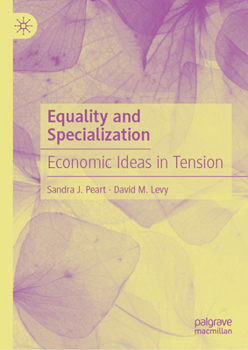
Equality and Specialization: Economic Ideas in Tension

Many people believe that specialization and market activity lead to inequality. In this book, economists Sandra J. Peart and David M. Levy argue that this tension between specialization and equality is more imagined than real. They draw on the sympathetic moral philosophy of Adam Smith--suggesting that people are natural equals--to guide policy discussions that ensure specialization benefits everyone. They argue that the presumption of equal dignity allows for interventions to correct past harms and reduce substantial inequality in starting points.
Equality and Specialization revisits the ideas of Adam Smith and John Stuart Mill, suggesting that equal dignity and the capacity to learn can create harmony between specialization and its economic benefits. Chapters examine how legislative actions and cultural factors have historically exacerbated inequality, particularly through the lenses of race and gender.
The book questions whether there is a limit to individual specialization, and it explores solutions to mitigate the associated risks. Sections also highlight the importance of policy choices guided by empathy and equal dignity, offering information to support the correction of past harms while enabling equitable outcomes. Readers will gain comprehensive insights to help them understand how markets and specialization impact well-being in the real world.
Customer Reviews
ThriftBooks ® and the ThriftBooks ® logo are registered trademarks of Thrift Books Global, LLC
