


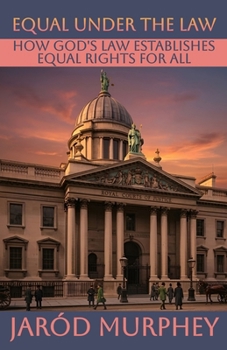
Equal Under the Law: How God's Law Establishes Equal Rights for All

In an era where the definition of justice often shifts with the cultural tide, Jar d Murphey's Equal Under the Law addresses some of the most fundamental questions of human existence: Do humans possess objective, inviolable rights? If so, where do these rights originate, and are they truly universal across all times and cultures? This book invites readers to look beyond subjective standards and explore the possibility of a timeless, unchanging foundation for morality that applies to every individual and society.
At the heart of this work is the case for the Law of God as the ultimate bedrock for objective moral duties and rights. Murphey introduces "Dispensational Theonomy," a theological framework designed to help readers understand and apply the Law of God. This theory provides a roadmap for discerning which standards in God's Law are universal and how they can guide nations and individuals today.
Ultimately, Equal Under the Law is rooted in the belief that every person is created in the image of God and deserves to be treated with dignity and without partiality. It challenges readers to forsake partisan politics and align their views of justice with the objective standards found in God's Law, fostering a commitment to loving one's neighbor as oneself. This book serves as a resource for those seeking a biblically consistent foundation for understanding human worth and the pursuit of a just society. Jar d Murphey does not believe in using generative artificial intelligence (AI) for the conception of written texts in books. Murphey writes all of his book manuscripts himself.Customer Reviews
ThriftBooks ® and the ThriftBooks ® logo are registered trademarks of Thrift Books Global, LLC
