


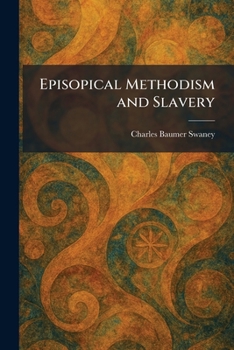
Episopical Methodism and Slavery

Select Format
Select Condition 
Book Overview
"Episopical Methodism and Slavery" is a comprehensive historical examination of the relationship between the Methodist Episcopal Church and the institution of slavery in the United States. Author Charles Baumer Swaney delves into the theological, social, and political tensions that defined the Methodist experience from the early republic through the mid-19th century. The work meticulously documents the internal conflicts that eventually fractured the church into separate northern and southern entities, reflecting the broader national divide over human bondage.
Through a rigorous analysis of church records, official conferences, and contemporary debates, Swaney illustrates the shifting attitudes of both clergy and congregants toward the morality of slavery. The narrative explores how the church struggled to reconcile its spiritual mission with the realities of a slaveholding society, highlighting the influential figures and policy shifts that shaped these discussions. This study serves as a vital resource for those interested in American religious history, the history of abolitionism, and the socio-cultural forces that preceded the American Civil War. It offers a scholarly look at the profound impact that religious institutions had on the moral and political landscape of antebellum America.
This work has been selected by scholars as being culturally important, and is part of the knowledge base of civilization as we know it. This work was reproduced from the original artifact, and remains as true to the original work as possible. Therefore, you may see the original copyright references, library stamps (as most of these works have been housed in our most important libraries around the world), and other notations in the work.
This work is in the public domain in the United States of America, and possibly other nations. Within the United States, you may freely copy and distribute this work, as no entity (individual or corporate) has a copyright on the body of the work.
As a reproduction of a historical artifact, this work may contain missing or blurred pages, poor pictures, errant marks, etc. Scholars believe, and we concur, that this work is important enough to be preserved, reproduced, and made generally available to the public. We appreciate your support of the preservation process, and thank you for being an important part of keeping this knowledge alive and relevant.
Customer Reviews
ThriftBooks ® and the ThriftBooks ® logo are registered trademarks of Thrift Books Global, LLC
