


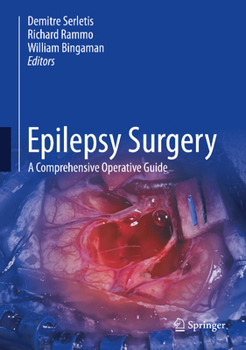
Epilepsy Surgery: A Comprehensive Operative Guide

A Comprehensive Operative Guide offers a distinctive focus on the evaluation and surgical management of medically refractory epilepsy, with particular emphasis on surgical anatomy and operative technique. Assembled by a team of experienced epilepsy neurosurgeons, epileptologists, and allied specialists, it guides readers through every stage of the presurgical pathway--from preoperative work-up and advanced imaging to neuropsychological assessment, invasive monitoring methods (including stereoelectroencephalography) and careful patient selection.
At the heart of the guide is an extensive presentation of the relevant surgical anatomy and operative techniques of epilepsy surgery, encompassing traditional and emerging interventions. Dedicated chapters address temporal, frontal, insular, central, parietal, occipital, and cingulate region epilepsy, along with in-depth reviews of important topics that include focal cortical dysplasia, epileptogenic tumors, hemispherectomy, and corpus callosotomy. High-quality intraoperative photographs, precise anatomical illustrations, and operative videos serve as a valuable visual companion throughout, helping readers follow each procedure step-by-step and translating written descriptions into practical, hands-on understanding. Detailed coverage of minimally invasive and neuromodulatory strategies--LITT, radiofrequency thermocoagulation, VNS, RNS, and DBS--rounds out this comprehensive volume. These approaches are presented within the broader context of surgical decision-making, emphasizing how modern technologies complement--and in select cases transform--traditional resective strategies.
By combining foundational principles with detailed operative anatomy and contemporary techniques, this resource provides an essential foundation for excellence in medical and surgical care for patients with medically intractable epilepsy, serving as an indispensable reference for trainees (students, residents, fellows), practicing neurosurgeons, neurologists, neuroradiologists, neuropsychologists, and other members of the multidisciplinary epilepsy team.
Customer Reviews
ThriftBooks ® and the ThriftBooks ® logo are registered trademarks of Thrift Books Global, LLC
