


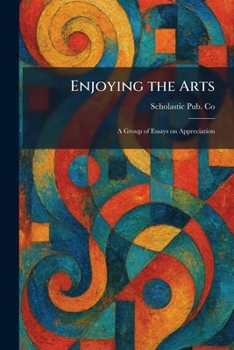
Enjoying the Arts: A Group of Essays on Appreciation

"Enjoying the Arts: A Group of Essays on Appreciation" is an insightful collection of essays designed to bridge the gap between the observer and the creative work. This volume explores the fundamental principles of aesthetics and the subjective experience of engaging with various art forms, offering readers a roadmap to understanding the complexities of visual and creative expression.
The contributors delve into the nature of beauty, the role of the critic, and the emotional resonance that fine art evokes in the viewer. By emphasizing the practical and philosophical aspects of artistic enjoyment, the collection serves as both an educational resource and a meditation on the value of the arts in human life. It provides a foundational guide for those seeking to deepen their engagement with painting, sculpture, and design. Through these essays, readers are encouraged to move beyond passive observation to a more active, informed, and enriched participation in the world of art. This work remains a significant contribution to the literature of art education and aesthetic theory.
This work has been selected by scholars as being culturally important, and is part of the knowledge base of civilization as we know it. This work was reproduced from the original artifact, and remains as true to the original work as possible. Therefore, you may see the original copyright references, library stamps (as most of these works have been housed in our most important libraries around the world), and other notations in the work.
This work is in the public domain in the United States of America, and possibly other nations. Within the United States, you may freely copy and distribute this work, as no entity (individual or corporate) has a copyright on the body of the work.
As a reproduction of a historical artifact, this work may contain missing or blurred pages, poor pictures, errant marks, etc. Scholars believe, and we concur, that this work is important enough to be preserved, reproduced, and made generally available to the public. We appreciate your support of the preservation process, and thank you for being an important part of keeping this knowledge alive and relevant.
Customer Reviews
ThriftBooks ® and the ThriftBooks ® logo are registered trademarks of Thrift Books Global, LLC
