


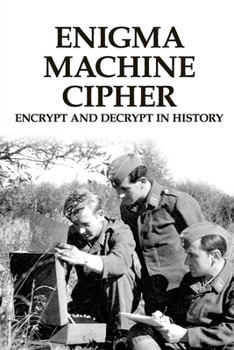
Enigma Machine Cipher: Encrypt And Decrypt In History: Military Strategy History

The story of the breaking and use of the German transcripts is undoubtedly a fascinating account of undercover activities during the war. However, are contemporary historians in danger of over-exaggerating the importance of Enigma? In this book, the author - one of Britain's foremost military historians, seeks to explore in-depth the impact of Enigma on both sides during the course of the war.
The first purpose is to explore what would have happened if, in the middle of World War 2, the command of the German signal had realized that Enigma had been breached and was being actively decoded. The author believes that ultimately there would have been little difference in the course of the war because the loss of high-speed insecure communications and its replacement by low-speed secure communication would have been, in net, a slight deficit to the German style of making war. He also makes clear that the Enigma decoding was happening in a context of much broader signal intelligence operations carried out by the Allies (principally the UK) which delivered a huge mass of material that would have continued. In fact, without Enigma, the Germans would have had to rely on a set of various communications security tools that were not themselves completely reliable either.
Related Subjects
HistoryCustomer Reviews
ThriftBooks ® and the ThriftBooks ® logo are registered trademarks of Thrift Books Global, LLC
