


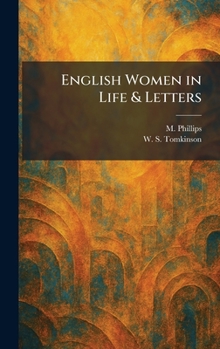
English Women in Life & Letters

"English Women in Life & Letters" provides an illuminating window into the social history and lived experiences of women in England from the Middle Ages through the nineteenth century. Through a meticulous examination of primary sources, including personal letters, private diaries, and contemporary literature, authors M. Phillips and W. S. Tomkinson reconstruct the daily realities, domestic roles, and societal expectations that defined the female experience across various historical eras.
The work explores a wide range of themes, from education and marriage to the changing landscape of women's work and their increasing presence in the literary world. By focusing on both well-known figures and the anonymous voices found in archival records, the authors offer a balanced and richly detailed narrative of British social evolution. "English Women in Life & Letters" serves as both a scholarly resource and an engaging portrait of the resilience and creativity of women. It remains a significant contribution to the fields of women's studies and English social history, highlighting the enduring power of the written word in capturing the complexities of the human spirit.
This work has been selected by scholars as being culturally important, and is part of the knowledge base of civilization as we know it. This work was reproduced from the original artifact, and remains as true to the original work as possible. Therefore, you may see the original copyright references, library stamps (as most of these works have been housed in our most important libraries around the world), and other notations in the work.
This work is in the public domain in the United States of America, and possibly other nations. Within the United States, you may freely copy and distribute this work, as no entity (individual or corporate) has a copyright on the body of the work.
As a reproduction of a historical artifact, this work may contain missing or blurred pages, poor pictures, errant marks, etc. Scholars believe, and we concur, that this work is important enough to be preserved, reproduced, and made generally available to the public. We appreciate your support of the preservation process, and thank you for being an important part of keeping this knowledge alive and relevant.
Customer Reviews
ThriftBooks ® and the ThriftBooks ® logo are registered trademarks of Thrift Books Global, LLC
