


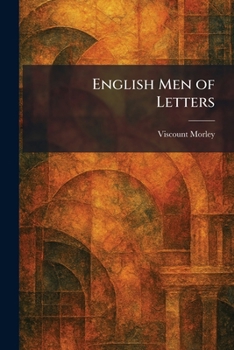
English Men of Letters

Select Format
Select Condition 
Book Overview
"English Men of Letters" is a seminal collection of literary biographies that helped define the English literary canon. Curated and edited by the distinguished statesman and man of letters, Viscount Morley, this series provides a comprehensive survey of the most influential writers in the English language. By bringing together specialized accounts of poets, novelists, and essayists, the work offers a deep dive into the creative minds that shaped centuries of British culture.
The collection focuses on the lives and legacies of iconic authors, balancing historical detail with insightful critical analysis. Each biography explores the unique circumstances of a writer's life and the evolution of their craft, making "English Men of Letters" an indispensable resource for understanding the development of English literature. From the early masters of verse to the giants of prose, this work remains a cornerstone of literary scholarship and a testament to the enduring power of the written word. It serves as both a historical record of literary reputation and a vibrant guide to the lives of those who transformed the English language into an art form.
This work has been selected by scholars as being culturally important, and is part of the knowledge base of civilization as we know it. This work was reproduced from the original artifact, and remains as true to the original work as possible. Therefore, you may see the original copyright references, library stamps (as most of these works have been housed in our most important libraries around the world), and other notations in the work.
This work is in the public domain in the United States of America, and possibly other nations. Within the United States, you may freely copy and distribute this work, as no entity (individual or corporate) has a copyright on the body of the work.
As a reproduction of a historical artifact, this work may contain missing or blurred pages, poor pictures, errant marks, etc. Scholars believe, and we concur, that this work is important enough to be preserved, reproduced, and made generally available to the public. We appreciate your support of the preservation process, and thank you for being an important part of keeping this knowledge alive and relevant.
Customer Reviews
ThriftBooks ® and the ThriftBooks ® logo are registered trademarks of Thrift Books Global, LLC
