


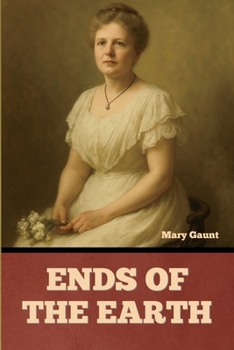
Ends of the Earth

Ends of the Earth by Mary Gaunt is a travel narrative that captures the spirit of early twentieth-century exploration through the eyes of a determined and perceptive woman traveler. Gaunt recounts her journeys to some of the world's most remote regions-particularly in Australia, South America, and the Pacific-at a time when such travel was difficult and often dangerous. Rather than presenting herself as a heroic adventurer, she writes with clarity and restraint, focusing on the landscapes she encounters and the practical realities of moving through unfamiliar territories.
A central strength of the book lies in Gaunt's observational style. She pays close attention to geography, climate, and daily life, describing deserts, forests, ports, and isolated settlements with vivid but controlled detail. Equally important is her interest in people: settlers, Indigenous communities, sailors, and fellow travelers. While her perspective reflects the attitudes of her era, she often shows sympathy and curiosity rather than judgment, attempting to understand how different cultures survive at what she calls the "ends" of the known world.
Ultimately, Ends of the Earth is more than a record of travel; it is a reflection on independence, resilience, and the meaning of distance-both physical and cultural. Gaunt's calm, intelligent voice challenges assumptions about women's roles in exploration and writing, offering a thoughtful alternative to the more sensational travel literature of her time. The book stands as an important example of early modern travel writing and a testament to Mary Gaunt's quiet courage and literary skill.
About the author
Mary Eliza Bakewell Gaunt (1861-1942), was an Australian novelist. she was educated at Grenville College, Ballarat, where her facility in writing was noted.
Mary Gaunt believed that a woman had the right to follow her own career and be financially independent, even if married. On 19 March 1881 she was one of the first women to sign the matriculation roll of the University of Melbourne; she began an arts course but did not continue after poor results in her first year. She turned to writing: 'It was my ambition to be a writer', she recalled, 'I wrote merely because I wanted to make money', and money was 'a means of locomotion'. Drawing on childhood memories of goldfield towns and her brothers' yarns of exotic places, she contributed articles and stories to Australian and overseas papers and magazines. One of her earliest pieces was an article on gold for Cassell's Picturesque Australasia. Her earnings enabled her to travel to England and India...
Customer Reviews
ThriftBooks ® and the ThriftBooks ® logo are registered trademarks of Thrift Books Global, LLC
