


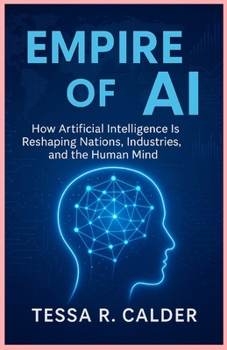
Empire of AI: How Artificial Intelligence Is Reshaping Nations, Industries, and the Human Mind

What if the future is no longer in the hands of humans, but in the code we've already written?
We are living in a time when machines don't just answer our questions, they finish our thoughts. Artificial intelligence is no longer a distant concept or a buzzword tossed around in tech circles. It is here. It is learning. Furthermore, it is evolving. And it's already transforming the very foundations of power, work, creativity, identity, and even the human soul.
Empire of AI takes you deep into the hidden war for control over tomorrow's intelligence. From the secret labs of OpenAI and DeepMind to the geopolitical arenas of the U.S. and China, from your smartphone to corporate boardrooms, this book reveals how AI is becoming the invisible architecture behind everything. It is not just changing industries, it is redefining what it means to think, create, and live.
Why should you read this book?
Because whether you're a student, entrepreneur, educator, policymaker, tech enthusiast, or just someone trying to make sense of a rapidly changing world, this affects you. The rise of AI is not a sci-fi prediction. It's your present. Your workplace, your government, your privacy, your health, your future, they're all being reimagined by algorithms that are growing more powerful by the day.
What will you learn?
Inside these pages, you'll uncover the minds behind the machines, the ethical chaos and opportunity, the battle for global dominance, and the spiritual, economic, and psychological impacts of machines that can learn, speak, create, and even feel. You'll journey through real-world examples, hidden truths, and provocative questions that will challenge how you see the world and yourself.
Who needs this book?
Anyone who wants to stay ahead, stay informed, and stay human in the age of artificial minds. This isn't just for tech insiders. It's for everyone who wonders, "What happens next and will I be ready?"
When should you read this?
Now. Not five years from now when it's too late. The future of intelligence isn't approaching. It has already arrived. And what we choose to do with it will define generations.
Customer Reviews
ThriftBooks ® and the ThriftBooks ® logo are registered trademarks of Thrift Books Global, LLC
