


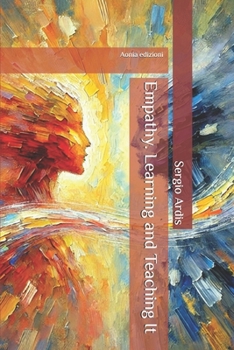
Empathy: Learning and Teaching It

This book arises from specific needs identified by the author.
First and foremost, it serves an educational purpose and is intended for those who wish to engage in the practice of empathy, both those learning to empathize and educators who teach or are beginning to teach empathy and, more broadly, communication.
Secondly, the book addresses the need to dispel certain limiting beliefs that hinder learning. These convictions, lacking scientific foundation, restrict both the practice and acquisition of empathy. For this reason, the book provides concrete tools to facilitate learning. The proposed educational method is based on cognitive-behavioral theories, which the literature recognizes as the most effective approach for teaching empathy.
The primary reason for writing this book is to offer a highly practical tool, drawing from nearly three decades of the author's teaching experience. Empathy is a fundamental skill for healthcare professionals, and this book is dedicated to them, promoting a patient-centered approach to care. Such an approach fosters positive effects for both patients and professionals, now widely supported by scientific evidence (Aonia edizioni).
Customer Reviews
ThriftBooks® and the ThriftBooks® logo are registered trademarks of Thrift Books Global, LLC
