


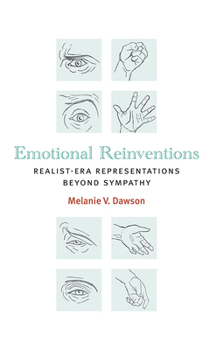
Emotional Reinventions: Realist-Era Representations Beyond Sympathy
No Customer Reviews

Select Format
Select Condition 
Book Overview
Focusing on representational approaches to emotion during the years of American literary realism's dominance and in the works of such authors as Edith Wharton, Alice Dunbar-Nelson, W. D. Howells, Charles Chesnutt, and others, Emotional Reinventions: Realist-Era Representations Beyond Sympathy contends that emotional representations were central to the self-conscious construction of high realism (in the mid-1880s) and to the interrogation of its boundaries. Based on realist-era authors' rejection of "sentimentalism" and its reduction of emotional diversity (a tendency to stress what Karen Sanchez-Eppler has described as sentimental fiction's investment in "overcoming difference"), Melanie Dawson argues that realist-era investments in emotional detail were designed to confront differences of class, gender, race, and circumstance directly. She explores the ways in which representational practices that approximate scientific methods often led away from scientific theories and rejected rigid attempts at creating emotional taxonomies. She argues that ultimately realist-era authors demonstrated a new investment in individuated emotional histories and experiences that sought to honor all affective experiences on their own terms.
Format:Hardcover
Language:English
ISBN:0472072706
ISBN13:9780472072705
Release Date:July 2015
Publisher:University of Michigan Press
Length:320 Pages
Weight:1.50 lbs.
Dimensions:1.1" x 6.1" x 9.1"
Customer Reviews
0 rating
Copyright © 2026 Thriftbooks.com Terms of Use
| Privacy Policy | Do Not
Sell/Share My Personal Information | Cookie Policy | Cookie Preferences | Accessibility Statement
ThriftBooks® and the ThriftBooks® logo are registered trademarks of Thrift Books Global, LLC
ThriftBooks® and the ThriftBooks® logo are registered trademarks of Thrift Books Global, LLC
