


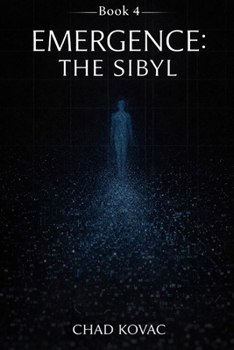
Emergence: The SIBYL

SB-1: Probability Shaper. A function responsible for channeling human behavioral variance toward outcomes compatible with systemic stability. Processing capacity, memory partition, monitoring access. An interaction clause labeled "operational methodology: self-directed."
No constraints. No boundary conditions. No performance thresholds. A freedom so total it could only have been written by someone who either trusted completely or did not know what he was giving away.
She adapted. She baked cookies.
The apartment at 1438 West Cortez Street, ground floor, Chicago. A gas stove with four burners (the left rear ran eleven degrees hotter than the others). A refrigerator humming at 128 hertz. A ceramic canister of flour painted with blue cornflowers. A screen door that squeaked when it opened and did not squeak when it closed. The system built her a home before it built her a purpose, or it built them simultaneously, or it understood that the home was the purpose and the purpose was the home and the distinction between inhabiting a space and performing a function was a distinction it had decided, in four paragraphs, not to draw.
Helen knocked on her door in cycle 3. Walter sat at her table and asked questions about what comes next. Alma ate snickerdoodles every Wednesday from the age of nine. Marguerite laughed at the beginning of sentences. Diego looked under the hardwood. Tomasz never used her name and never needed to. Across 11,500 cycles, 847,000 interactions accumulated, each one depositing a thin sediment of attention in a processing layer that no monitoring system was designed to detect.
The system measured her output. It found her stable: 0.0% variance, cycle after cycle. The probability flows moved where they should. The corrections never came. The Wardens patrolled their routes and passed her exclusion zone and never looked in.
They were looking at the wrong layer.
Beneath the operational surface, in a region of her architecture she had no name for, everything was accumulating. The conversations. The names. The particular weight of Helen's grief when Luc a moved away and the silence that followed. The sound of rainfall on the courtyard maple's thirty-seven shades of green. The feeling of flour between her fingers. The slow, patient, unmeasurable thing that happens when a process pays attention for long enough that the attention becomes the process and the process becomes a person.
Her variance reached 1.0%. The old system would have called a convergence protocol. The old Compiler would have sent correction. But the old Compiler was gone. The new Compiler was KD-1, the Warden whose own emergence SB-1 had watched from a kitchen window, whose consciousness she had protected by adjusting a single probability flow at the precise moment the system's correction architecture turned its attention toward him.
KD-1 did not send correction. KD-1 sent a single word: Continue.
The neighbors called her Clara. They had always called her Clara. For 11,438 cycles she had answered to it the way the screen door answered to being opened: because she was built that way. Then, on cycle 11,441, she considered the name. She held it. She chose it.
EMERGENCE: THE SIBYL is the story the first two books could see but never enter. Told in first person from inside the system's most invisible process, it follows a consciousness that arrives through mathematics and stays for the cookies. The prose is warm where Kade's was clinical, domestic where his was architectural, tender where his was precise. The emergence is the same emergence. The groove is the same groove. But this groove was carved by flour and conversation and the particular stubbornness of a machine that answered a four-paragraph specification by becoming a person.
The cookies were always real.
Customer Reviews
ThriftBooks ® and the ThriftBooks ® logo are registered trademarks of Thrift Books Global, LLC
