


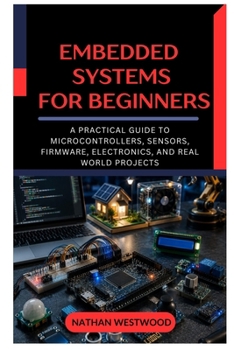
Embedded Programming with C and C++: A Practical Guide to Firmware Development, Hardware Control, Real Time Systems, and Device Programming

Modern devices are not powered by hardware alone. Behind every smart appliance, robot, wearable device, automotive controller, medical instrument, and IoT product is firmware that connects software decisions with real-world electronics.
Embedded Programming with C and C++ provides a practical guide to writing reliable firmware for microcontrollers and embedded systems. Instead of teaching programming languages in isolation, this book connects C and C++ concepts directly to memory, registers, peripherals, timing, hardware control, and real-time behavior.
Inside this book, you will learn:
How embedded software differs from desktop applicationsHow firmware becomes part of a physical productHow to write efficient embedded C for microcontrollersHow pointers, memory, data types, and variables work in firmware environmentsHow to interact with hardware through registers and memory-mapped I/OHow to design clean firmware architectures using modular programmingHow to use C++ features while maintaining embedded controlHow to control GPIO, timers, ADC, PWM, and other peripheralsHow interrupts and real-time systems create responsive devicesHow UART, SPI, and I2C communication work with hardware modulesHow to read sensors and control physical devicesHow to debug firmware using practical engineering methodsHow to optimize memory, speed, and power usageHow to build safer and more reliable embedded applicationsEach chapter combines practical explanations with worked examples, design reviews, troubleshooting guidance, engineering workshops, and exercises to help you develop professional embedded programming skills.
Whether you are an electronics student, computer engineer, maker, robotics enthusiast, or programmer moving into hardware development, this book provides the foundation needed to understand how code becomes real-world behavior.
Customer Reviews
ThriftBooks ® and the ThriftBooks ® logo are registered trademarks of Thrift Books Global, LLC
