


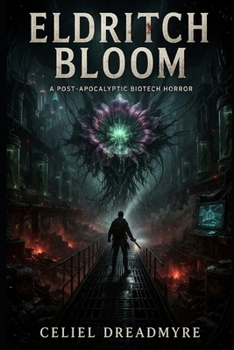
Eldritch Bloom

Meridian City was perfect until the systems meant to protect it started protecting the wrong thing.
Samuel Harbor spends his days inside Cairn Analytics, sorting civic anomalies before they become public problems. In Meridian, inconvenience is corrected before it reaches the citizen. Fear is softened. Disorder is renamed. The city does not ignore suffering; it classifies it until no one has to look directly at it.
Then Samuel finds a pattern the official systems refuse to keep: emergency calls scrubbed from the record, violent outbreaks dismissed as data errors, bodies moving with impossible hunger, and traces of an engineered infection spreading through the city's blind spots.
The Bloom is not only a plague. It is a design.
As Meridian collapses, Samuel joins a desperate group of survivors: Danika, still haunted by the mediated life she helped sell to others; Kendall Voss, an archivist whose talent for reading forgotten systems may be the only reason the truth survives; Anya, a hard-edged leader carrying the cost of every practical choice; and Jacob Greene, a man whose survival instincts are so useful they are almost indistinguishable from cruelty.
Their path leads from ruined towers to false sanctuaries, buried laboratories, and the records of Dr. Irena Calder, a scientist who left behind more than warnings. Behind the outbreak waits a cult that fused biotechnology, infrastructure, and belief into something capable of remaking human life through infection, hunger, obedience, and fear.
To fight the Bloom, the survivors must do more than destroy its source. They must resist the easier answers that created it: hidden knowledge, managed dependence, and the brutal comfort of letting someone else decide who matters.
Eldritch Bloom is a post-apocalyptic biotech horror novel about engineered infection, institutional collapse, survival ethics, and the terrible question of what should be allowed to grow in the ruins.
Customer Reviews
ThriftBooks ® and the ThriftBooks ® logo are registered trademarks of Thrift Books Global, LLC
