


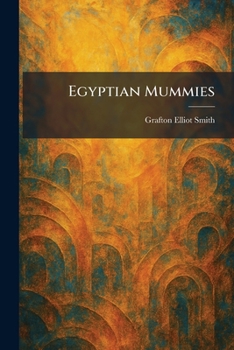
Egyptian Mummies

"Egyptian Mummies" is a foundational study exploring the intricate art and science of mummification in ancient Egypt. Authored by the pioneering anatomist and anthropologist Grafton Elliot Smith, this work delves into the technical methods employed across different dynasties to preserve the human body for the afterlife. Smith provides detailed observations on the evolutionary development of embalming techniques, drawing from extensive physical examinations of royal and common remains.
The text examines the cultural and religious motivations behind these practices, offering insights into the Egyptian conception of the soul and the ritualistic requirements for immortality. With its focus on both the anatomical precision of the embalmers and the broader archaeological significance of their craft, "Egyptian Mummies" serves as a crucial resource for understanding the complexities of Nilotic funerary traditions. This authoritative account remains a significant contribution to Egyptology, blending scientific inquiry with historical analysis to illuminate one of antiquity's most enduring mysteries.
This work has been selected by scholars as being culturally important, and is part of the knowledge base of civilization as we know it. This work was reproduced from the original artifact, and remains as true to the original work as possible. Therefore, you may see the original copyright references, library stamps (as most of these works have been housed in our most important libraries around the world), and other notations in the work.
This work is in the public domain in the United States of America, and possibly other nations. Within the United States, you may freely copy and distribute this work, as no entity (individual or corporate) has a copyright on the body of the work.
As a reproduction of a historical artifact, this work may contain missing or blurred pages, poor pictures, errant marks, etc. Scholars believe, and we concur, that this work is important enough to be preserved, reproduced, and made generally available to the public. We appreciate your support of the preservation process, and thank you for being an important part of keeping this knowledge alive and relevant.
Customer Reviews
ThriftBooks ® and the ThriftBooks ® logo are registered trademarks of Thrift Books Global, LLC
