


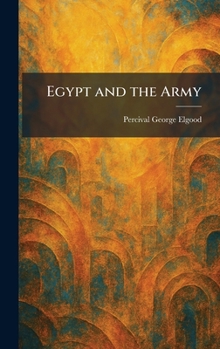
Egypt and the Army

"Egypt and the Army" offers an insightful and firsthand account of the complex relationship between the British military and the Egyptian state during a pivotal era of the early 20th century. Written by Percival George Elgood, a British officer with deep ties to the region, the work examines the administrative and political challenges faced by Egypt during the First World War and its immediate aftermath.
The narrative details the transition of Egypt from a British protectorate toward its struggle for independence, focusing on the strain placed on the nation by the demands of the British military forces stationed there. Elgood provides an analytical look at the impact of the Egyptian Labor Corps, the rise of nationalist sentiments, and the internal frictions within the British administration. By blending military history with political observation, the book captures the socioeconomic tensions that fueled the 1919 revolution. This work remains a significant historical resource for understanding the geopolitical landscape of the Middle East and the decline of imperial influence in the region.
This work has been selected by scholars as being culturally important, and is part of the knowledge base of civilization as we know it. This work was reproduced from the original artifact, and remains as true to the original work as possible. Therefore, you may see the original copyright references, library stamps (as most of these works have been housed in our most important libraries around the world), and other notations in the work.
This work is in the public domain in the United States of America, and possibly other nations. Within the United States, you may freely copy and distribute this work, as no entity (individual or corporate) has a copyright on the body of the work.
As a reproduction of a historical artifact, this work may contain missing or blurred pages, poor pictures, errant marks, etc. Scholars believe, and we concur, that this work is important enough to be preserved, reproduced, and made generally available to the public. We appreciate your support of the preservation process, and thank you for being an important part of keeping this knowledge alive and relevant.
Customer Reviews
ThriftBooks ® and the ThriftBooks ® logo are registered trademarks of Thrift Books Global, LLC
