


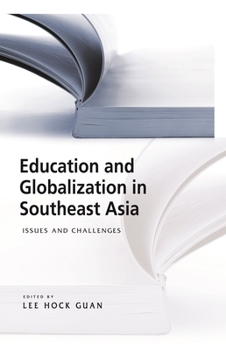
Education and Globalization in Southeast Asia: Issues and Challenges
No Customer Reviews

Prior to the era of globalization, education in Southeast Asia was viewed in the context of the national state and it was deployed in the service of state and nation-building and national economic development. States monopolized education, and public-funded centralized education systems were established to teach literacy, transmit national cultures and promote social cohesion, and to produce literate workers. Globalization forces, however, dramatically impacted in varying ways and degrees the national education systems across the region. As states begun to see their citizens as resources to enhance the countries' competitiveness in the global market, it, among other things, led to the increasing demand for highly skilled and qualified human capital. The accompanying neoliberal ideology led to varying degrees of decentralization, privatization and internationalization of education, especially of higher education, in Southeast Asia. The chapters in this volume focus on a number of issues and challenges confronting the education sector in Southeast Asia, including: (i) the contrasting language in education policy in Singapore and Malaysia; (ii) the introduction of an English-medium private education sector in Malaysia; (iii) the internationalization of Thai higher education; (iv) access and quality issues in the massification of Malaysian higher education; (v) secondary school quality and higher education participation in Indonesia; (vi) equity, access and retention in primary school education in Malaysia; and (vii) reforms in the primary and secondary education in Myanmar.
Format:Paperback
Language:English
ISBN:9814762903
ISBN13:9789814762908
Release Date:September 2018
Publisher:Iseas - Yusof Ishak Institute
Length:202 Pages
Weight:0.64 lbs.
Dimensions:0.5" x 6.0" x 9.0"
Customer Reviews
0 rating
Copyright © 2026 Thriftbooks.com Terms of Use
| Privacy Policy | Do Not
Sell/Share My Personal Information | Cookie Policy | Cookie Preferences | Accessibility Statement
ThriftBooks® and the ThriftBooks® logo are registered trademarks of Thrift Books Global, LLC
ThriftBooks® and the ThriftBooks® logo are registered trademarks of Thrift Books Global, LLC
