


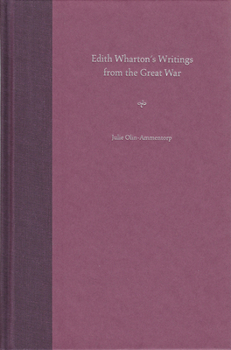
Edith Wharton's Writings from the Great War

An examination of Edith Wharton's works from World War I, reclaiming Wharton as a "Great War" writer
Edith Wharton resided in France during World War I, visiting combat zones and hospitals and working tirelessly with refugee and children's relief organizations. In magazines and newspapers such as the New York Times, Saturday Evening Post, and Scribner's, she wrote prodigiously about the war--dispatches, feature articles, and poems. During this time she also completed a number of short stories, two books (Summer and The Marne), and the essays that were collected in French Ways and Their Meaning. The war remained a topic for her after its conclusion, most notably in her 1923 novel, A Son at the Front. Yet none of this work has received the critical attention it deserves. Julie Olin-Ammentorp, through her detailed examination of a wide range of texts, including archival sources and materials long out of print, reclaims Wharton's war writings and places her in the company of other "Great War" writers.
Customer Reviews
ThriftBooks® and the ThriftBooks® logo are registered trademarks of Thrift Books Global, LLC
