


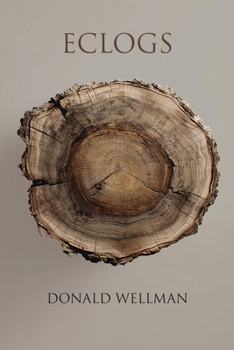
Eclogs

Eclogs are most often set in the countryside. That is where these poems begin. Pastures and dilapidated barns, small homes and brooks that carve the forest into jigsaw puzzles before descending to the sea, abandoned factories. This is a landscape created by European settler populations as they explored the rivers that traverse the land. One model poet for my thinking has been Frederick H lderlin. In my youth I lived in the Neckar valley as he did. That as well as the high hills and low mountains of a once agricultural New Hampshire and Maine have shaped my feeling for landscapes. The language owes much to objectivist poetics. The poems range from conversations among settlers to the recognition of others who reside in a baroque past that originates with reflections on the cosmos made by nomadic populations and that continue among today's refugees who live in Gaza or the Sudan under the shadow of a continuing holocaust.
The poems usually follow a three-step pattern. The first stage includes narrative or historical material, the second is reflective, and the third a conclusion that much like the ways in which sonnets do, concludes with an image that propels one onward. The method is baroque. Individual poems participate in a series, clusters or thematic runs, interspersed with lyric fragments. The aura of history is built without specific standards of authenticity (inventive, autobiographical, or historical). My goal has been to make an accessible lyric poetry in which individual elements are parts of an emergent whole. The work then is a holistic enterprise wherein shifts of perspective are cumulative. The work is riverine and baroque. It engages the cosmic landscape underlying observable phenomenon, its flow and its silences. This book is to be read from the first page to the last, continuously, as if it were a story or a fable.
Customer Reviews
ThriftBooks® and the ThriftBooks® logo are registered trademarks of Thrift Books Global, LLC
