


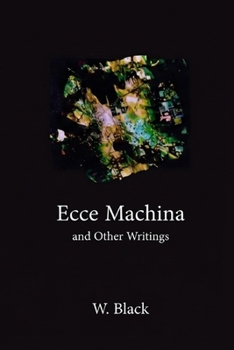
Ecce Machina: and Other Writings

Ecce Machina is a philosophical exploration of how technological modernity transforms the very ontology of the human. Drawing on Nietzsche's genealogical method, the book critiques inherited humanist assumptions that once grounded meaning, agency, and value, revealing them as contingent constructs now strained by machinic life.
Through an existential lens, it examines how individuals confront becoming in a world where technology increasingly mediates perception, desire, and social possibility. Engaging Foucault's analyses of power-knowledge, Ecce Machina shows how technological systems discipline subjects, reorganize social relations, and generate new regimes of truth.
As the boundaries between human and machine blur, the text traces a transition toward posthumanism-an ontological reconfiguration in which agency, value, and identity emerge from hybrid networks rather than autonomous selves. Provocative and analytically precise, this work challenges readers to rethink social theory in an age where the machinery of power is no longer merely external but constitutive of existence itself.
Related Subjects
PhilosophyCustomer Reviews
ThriftBooks ® and the ThriftBooks ® logo are registered trademarks of Thrift Books Global, LLC
